

Welcome to Clyde Hill
Living in Clyde Hill, WA
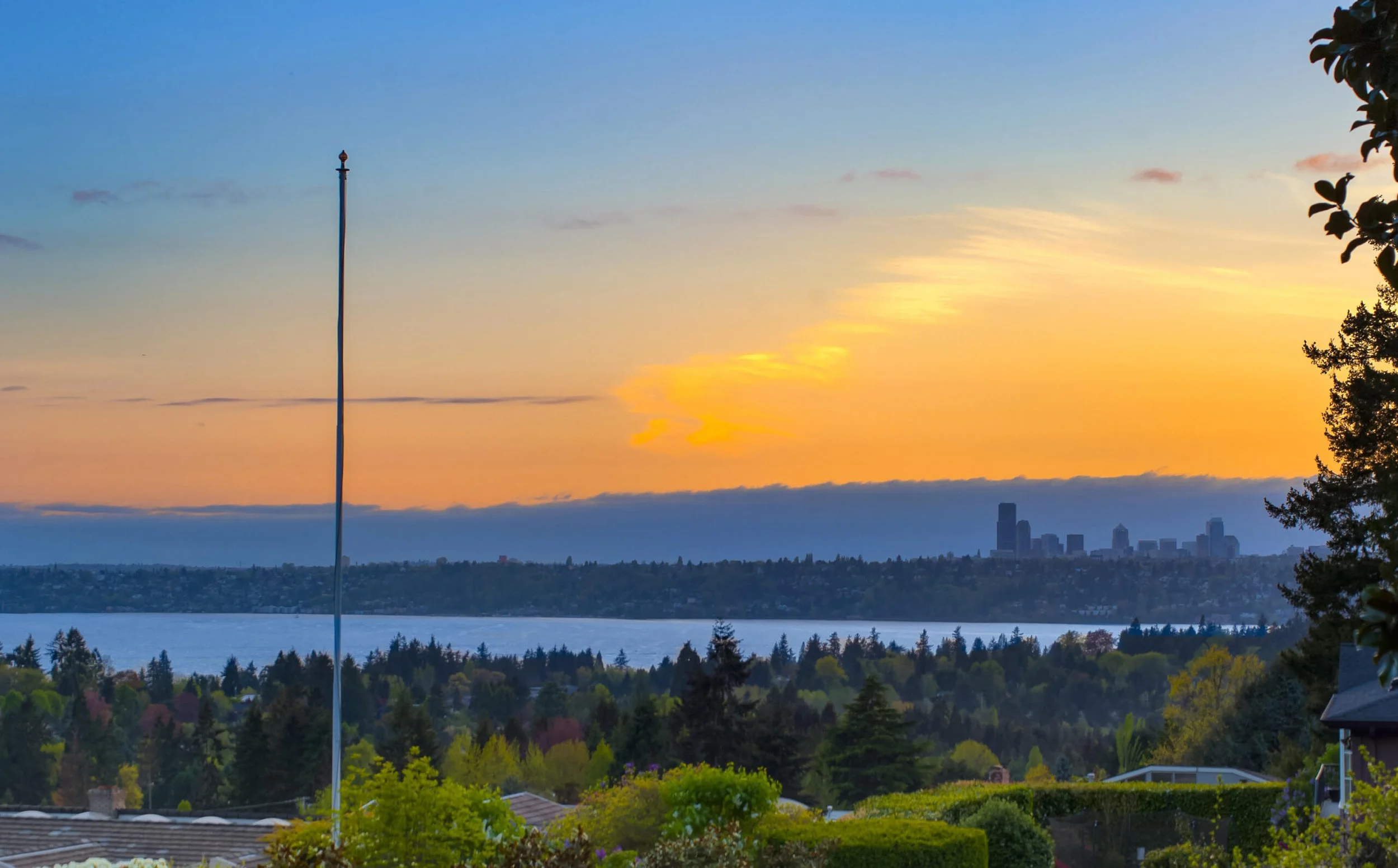
Clyde Hill sits on the ridge above Lake Washington, between Medina, Yarrow Point, and Bellevue — a small, entirely residential city known for its elevation, its lot sizes, and its privacy. There's no commercial strip and no through-traffic; it's just quiet streets and some of the biggest parcels on the Eastside.
Whether you're after a hillside home with lake and mountain views or simply want more land than Medina's waterfront blocks allow, Clyde Hill delivers Eastside prestige with a bit more breathing room.
-
-
-
-
Clyde Hill's recreation is understated — a few well-loved local spots rather than a long list of attractions.
Clyde Hill City Park: A family-friendly gathering spot, popular for weekend softball and soccer
View Park: A quieter green space nearby
Clyde Beach Park: Waterfront access for picnics and water activities
Toffee Lookout: Sweeping views of downtown Seattle and the surrounding evergreens
Golf: Overlake Golf & Country Club, with an 18-hole course, pool, and dining, serving as a social hub for residents
Shopping & Dining: A small local center at 92nd Ave NE and NE 24th Street with a Starbucks, Tully's, and family-run restaurants, plus downtown Bellevue just two miles away
-
What school district serves Clyde Hill? The Bellevue School District. Students typically attend Clyde Hill Elementary, Chinook Middle School, and Bellevue High School, though verify the specific address since a few sources cite different school assignments.
What's the price range for homes in Clyde Hill? Historically $2 million to $8.5 million, with select properties reaching as much as $11 million.
How big are Clyde Hill lots? Notably large for the Eastside — some newer homes exceed 20,000 square feet of living space, and lots can span up to 42,000 square feet.
When was Clyde Hill established? 1953, as a low-density residential city, and it's maintained that character since.
What's the population of Clyde Hill? Just over 3,100 residents across roughly one square mile.
Is Clyde Hill close to Bellevue? Yes — downtown Bellevue is about two miles away, with easy access to the SR-520 floating bridge toward Seattle.
What kind of homes are in Clyde Hill? A mix of Northwest Contemporary, Mid-Century modern, lakefront, and occasional Beaux-Arts styles, most originally built in the 1970s.
Is there a country club in Clyde Hill? Yes — Overlake Golf & Country Club is a longstanding social and recreational hub for residents.
What are the local parks like? Clyde Hill City Park and View Park cover everyday recreation, while Clyde Beach Park adds waterfront access.
Who should I talk to about buying or selling in Clyde Hill? Reach out to Melissa for current listings and guidance specific to this part of the Eastside.
Clyde Hill Real Estate
About Clyde Hill
Clyde Hill combines some of the largest residential lots on the Eastside with genuine lake and mountain views, all within a two-mile drive of downtown Bellevue. It's consistently ranked among the wealthiest small cities in Washington, and the mix of mature 1970s-era homes alongside newer luxury construction gives buyers real variety within a tightly bounded, prestigious footprint.
Clyde Hill Housing Market
Homes here have historically sold anywhere from $2 million to $8.5 million, with select properties reaching up to $11 million — a wide enough range that a single median wouldn't tell you much without knowing where in that spectrum a specific listing falls. (I found no reliable current median sale price or days-on-market figure for Clyde Hill specifically — pull actual sold comps from Compass/MLS before publishing any market figure as fact.)
Why Buy a Home in Clyde Hill?
For buyers who want serious lot size and privacy without leaving the immediate Bellevue area, Clyde Hill is hard to beat — most Eastside luxury communities this close to downtown Bellevue don't offer lots anywhere near this large. The combination of top-rated schools, an established country club, and genuinely quiet, low-density streets makes it a strong fit for buyers prioritizing space and permanence over new construction.